


CASE STUDY
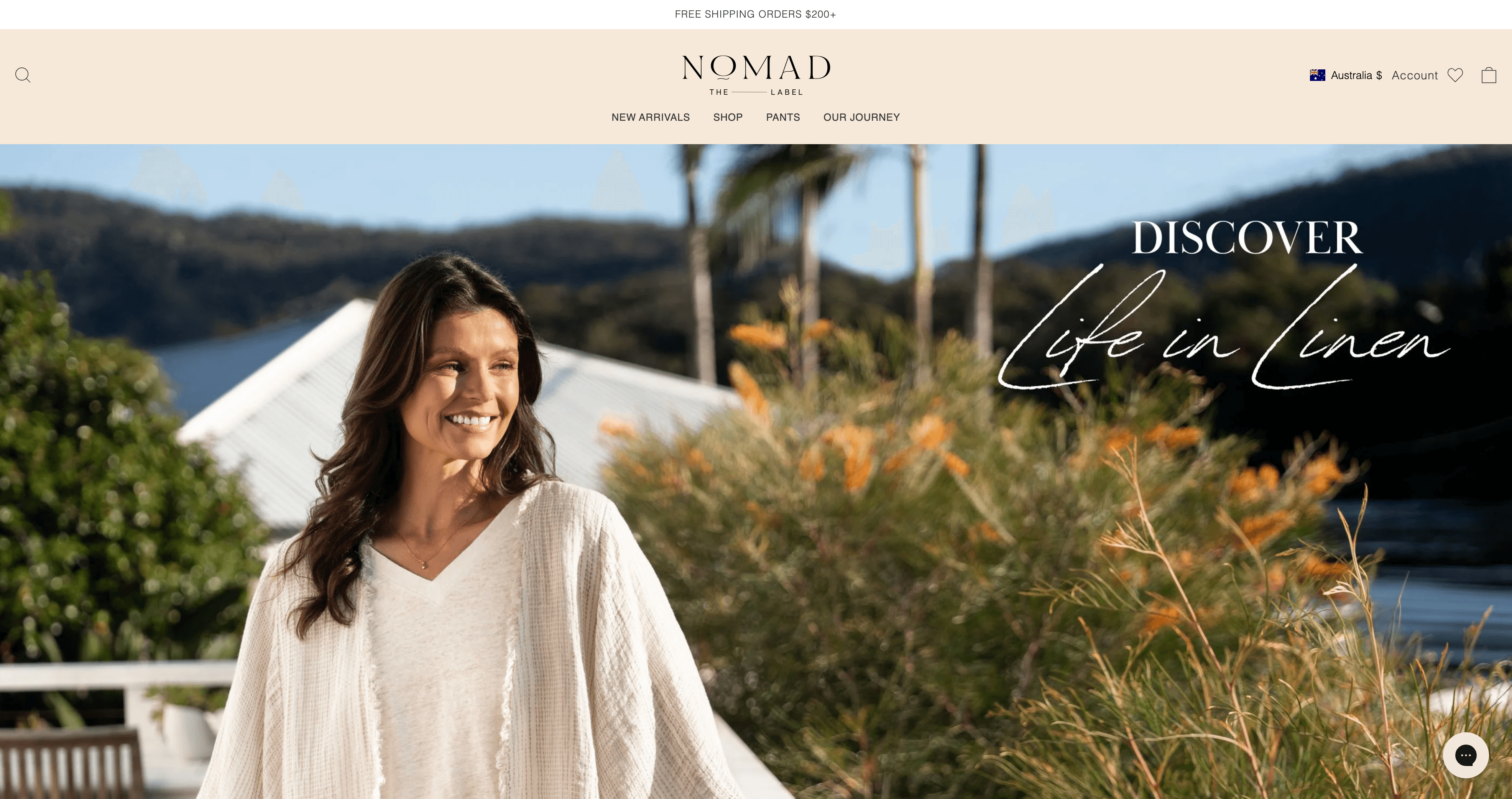
Nomad The Label
Nomad The Label
$1M to $10M: 10x Revenue Growth
$1M to $10M: 10x Revenue Growth
How Market Lead built a custom segmentation algorithm and restructured campaigns around dynamic performance metrics.
How Market Lead built a custom segmentation algorithm and restructured campaigns around dynamic performance metrics.
Industry
Industry
DTC Fashion / E-commerce
DTC Fashion / E-commerce
Services
Services
Google Ads, Microsoft Ads, Feed Optimization, Attribution
Google Ads, Microsoft Ads, Feed Optimization, Attribution
Ad Spend
Ad Spend
$1M → $10M Annual Revenue
$1M → $10M Annual Revenue
Revenue Growth
Revenue Growth
10x
Monthly Google Ads Revenue
Monthly Google Ads Revenue
$400K+
Microsoft Ads ROAS
Microsoft Ads ROAS
1,000%
The Challenge
Challenge
The Challenge
Challenge
The Challenge
Challenge
Nomad The Label is a direct-to-consumer fashion brand with a large catalog of products across multiple ranges. The owner had been self-managing ads across Google and Facebook, but reached a ceiling. After discovering Market Lead through a podcast, they came on board with ambitious targets:
Nomad The Label is a direct-to-consumer fashion brand with a large catalog of products across multiple ranges. The owner had been self-managing ads across Google and Facebook, but reached a ceiling. After discovering Market Lead through a podcast, they came on board with ambitious targets:
Scale annual revenue from $1 million to $4 million in year one, and reach $10 million+ in year two. The business needed to transition from self-managed campaigns to a professional, scalable strategy. There was no structured segmentation across a high volume of products, and Google Ads revenue was sitting at roughly $40,000/month with a 350% ROAS.
Scale annual revenue from $1 million to $4 million in year one, and reach $10 million+ in year two. The business needed to transition from self-managed campaigns to a professional, scalable strategy. There was no structured segmentation across a high volume of products, and Google Ads revenue was sitting at roughly $40,000/month with a 350% ROAS.
Strategy and Execution
Execution
Strategy and Execution
Execution
Strategy and Execution
Execution
Market Lead identified that with the volume of products and product ranges, a traditional segmentation approach based on categories wouldn’t be effective. Instead, the team built a custom algorithm that dynamically categorized products into four performance-based segments using six key metrics.
Custom Product Segmentation Algorithm
Self-built algorithm categorizing all products into four core segments based on impression benchmarks, click benchmarks, spend benchmarks, sales volume benchmarks, conversion rate benchmarks, and ROAS benchmarks.
Custom Product Segmentation Algorithm
Self-built algorithm categorizing all products into four core segments based on impression benchmarks, click benchmarks, spend benchmarks, sales volume benchmarks, conversion rate benchmarks, and ROAS benchmarks.
Custom Product Segmentation Algorithm
Self-built algorithm categorizing all products into four core segments based on impression benchmarks, click benchmarks, spend benchmarks, sales volume benchmarks, conversion rate benchmarks, and ROAS benchmarks.
Performance Max Campaigns
Hyper-segmented feed-only Performance Max campaigns structured around dynamic product performance rather than product ranges. Budget allocation adjusted automatically as products moved between performance tiers.
Performance Max Campaigns
Hyper-segmented feed-only Performance Max campaigns structured around dynamic product performance rather than product ranges. Budget allocation adjusted automatically as products moved between performance tiers.
Performance Max Campaigns
Hyper-segmented feed-only Performance Max campaigns structured around dynamic product performance rather than product ranges. Budget allocation adjusted automatically as products moved between performance tiers.
Product Feed Optimization
Automated product feed optimizations to improve shopping ad positioning, increase CTRs, and capture greater market share across Google Shopping. Launched segmented sales and new range campaigns alongside YouTube Ads.
Product Feed Optimization
Automated product feed optimizations to improve shopping ad positioning, increase CTRs, and capture greater market share across Google Shopping. Launched segmented sales and new range campaigns alongside YouTube Ads.
Product Feed Optimization
Automated product feed optimizations to improve shopping ad positioning, increase CTRs, and capture greater market share across Google Shopping. Launched segmented sales and new range campaigns alongside YouTube Ads.
Channel Expansion & Attribution
Expanded into Microsoft Ads achieving consistent 1,000% ROAS. Implemented third-party attribution tracking to ensure accurate revenue reporting across all channels beyond platform-reported metrics.
Channel Expansion & Attribution
Expanded into Microsoft Ads achieving consistent 1,000% ROAS. Implemented third-party attribution tracking to ensure accurate revenue reporting across all channels beyond platform-reported metrics.
Channel Expansion & Attribution
Expanded into Microsoft Ads achieving consistent 1,000% ROAS. Implemented third-party attribution tracking to ensure accurate revenue reporting across all channels beyond platform-reported metrics.


Results
Results
Results
Results
Results
Results
METRIC
METRIC
METRIC
BEFORE
BEFORE
BEFORE
AFTER
AFTER
AFTER
CHANGE
CHANGE
CHANGE
Annual Revenue
Annual Revenue
Annual Revenue
$1 million
$1 million
$1 million
$10 million
$10 million
$10 million
+900%
+900%
+900%
Google Ads Monthly Revenue
Google Ads Monthly Revenue
Google Ads Monthly Revenue
$40,000
$40,000
$40,000
$400,000+
$400,000+
$400,000+
+900%
+900%
+900%
ROAS
ROAS
ROAS
350%
350%
350%
500% (consistent)
500% (consistent)
500% (consistent)
+43%
+43%
+43%
Microsoft Ads ROAS
Microsoft Ads ROAS
Microsoft Ads ROAS
N/A
N/A
N/A
1,000%
1,000%
1,000%
New Channel
New Channel
New Channel
Key Takeaways
Takeaways
Key Takeaways
Takeaways
Key Takeaways
Takeaways
A proprietary product segmentation algorithm using six performance metrics replaced traditional category-based targeting, enabling product-level budget precision across a large catalog.
Performance Max campaigns structured around dynamic performance data — not static categories — ensured top performers always received maximum spend.
Microsoft Ads expansion delivered 1,000% ROAS from scratch, proving the value of multi-channel diversification.
Third-party attribution provided a true picture of cross-channel performance beyond platform-reported metrics.

Ready to Scale Your Ecommerce Past the Plateau?
Case study prepared by Market Lead · 2026
Case study prepared by Market Lead · 2026